

The Numbers
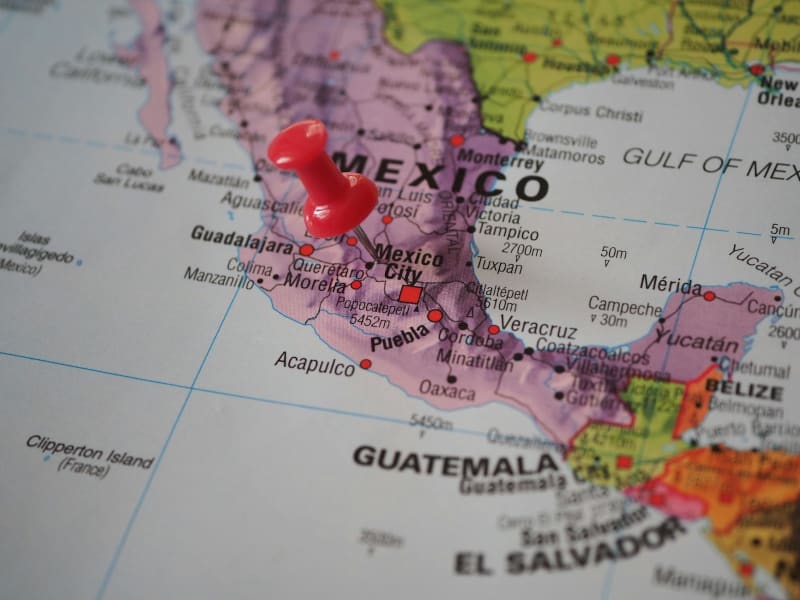
- Over 99 million eligible voters are expected to participate in Mexico's upcoming general election, marking one of the largest electoral events in the country's history and a significant test of its democratic institutions.
- The election will determine the next president, all 500 members of the Chamber of Deputies, all 128 members of the Senate, and numerous state and local officials, representing a comprehensive mandate for the incoming administration.
- A significant portion of the electorate, estimated to be around 40%, remains undecided or open to persuasion, indicating that campaign messaging and external influences could play a crucial role in shaping the final outcome.
- Historical voter turnout for presidential elections in Mexico typically hovers between 55% and 65%, suggesting that approximately 40-50 million citizens might ultimately cast their ballots, a figure that could be influenced by campaign fervor and perceived stakes.
- Polling data consistently shows Claudia Sheinbaum of the ruling Morena party holding a substantial lead, often exceeding 20 percentage points over her closest rivals, though the margin could narrow as election day approaches.
- The economic implications are substantial, with projections indicating that the election's outcome could significantly impact foreign investment, trade policies with the United States and Canada, and domestic economic reforms, influencing market confidence and growth trajectories.
Context Check
The assertion by Claudia Sheinbaum, the frontrunner in Mexico's presidential race, that the United States is engaging in politically motivated interference, arrives at a particularly sensitive moment in bilateral relations. Such accusations, if substantiated, could severely strain diplomatic ties and complicate cooperation on critical issues like migration, security, and trade. The timing of these remarks, close to the election, suggests a strategic move to galvanize nationalist sentiment and position herself as a defender of Mexican sovereignty against perceived external pressures. It also highlights the historical undercurrent of suspicion regarding U.S. influence in Latin American affairs, a narrative that often resonates deeply within Mexico.
Understanding the context requires acknowledging the complex history between the U.S. and Mexico, which has often been characterized by an imbalance of power and recurring instances of perceived or actual interference. From economic policies to security cooperation, the proximity and economic interdependence of the two nations inevitably lead to a dynamic where actions taken by one government can be interpreted as influential, if not directly interventionist, by the other. Sheinbaum's statement taps into this historical consciousness, framing the upcoming election not just as an internal political contest but as a potential battleground for national autonomy, a theme that could resonate powerfully with voters.
Furthermore, the current geopolitical climate, marked by increased global political polarization and heightened scrutiny of electoral processes worldwide, adds another layer of complexity. Accusations of foreign interference, whether from the U.S. or other global powers, are increasingly common and can be potent political tools. For Sheinbaum, leveraging such concerns could serve to consolidate her base, rally undecided voters, and potentially preempt any unfavorable outcomes by attributing them to external manipulation. The U.S. government, for its part, faces the delicate task of navigating its relationship with Mexico while adhering to principles of non-interference, a principle that is often tested in the crucible of international politics and close alliances.
Background
Claudia Sheinbaum, a close ally of current President Andrés Manuel López Obrador and the candidate for the ruling Morena party, is widely considered the frontrunner to succeed him. Her political career has largely been shaped within the framework of left-leaning populism and environmental activism, positioning her as a continuation of López Obrador's policies but with her own distinct approach. Her background as a scientist and former mayor of Mexico City provides her with a different profile than many traditional politicians, emphasizing technocratic solutions alongside social welfare programs. The accusations of U.S. interference are not isolated incidents but emerge from a broader pattern of political discourse where sovereignty and national identity are frequently invoked.
The relationship between Mexico and the United States is one of the most significant bilateral partnerships globally, characterized by deep economic integration, extensive migration flows, and shared security challenges. However, this proximity also breeds a complex dynamic where U.S. policy decisions, whether related to trade, border security, or drug interdiction, can have profound impacts on Mexican politics and society. Historically, the U.S. has been accused of meddling in Latin American affairs, and these historical grievances often inform contemporary political rhetoric in Mexico, making any perceived U.S. overreach a sensitive issue that candidates like Sheinbaum can leverage.
The upcoming Mexican presidential election is taking place within a broader context of democratic challenges and political shifts across the Americas. Concerns about democratic backsliding, the rise of populism, and the influence of external actors are prevalent themes. Sheinbaum's campaign, like many others in the region, must navigate these complex currents, balancing domestic priorities with the realities of international relations. Her specific accusation against the U.S. suggests a calculated strategy to define the terms of the external relationship and to rally domestic support by emphasizing national self-determination in the face of perceived foreign influence.
Winners and Losers
If the accusations of U.S. interference gain traction and are perceived as credible by a significant portion of the Mexican electorate, Claudia Sheinbaum could emerge as a significant winner. Such a narrative allows her to consolidate nationalist support, portray herself as a staunch defender of Mexican sovereignty, and potentially rally voters who are skeptical of foreign influence. This could translate into increased voter turnout among her base and a stronger mandate, effectively turning a potential external threat into an internal rallying cry. Her opponents, particularly those perceived as closer to U.S. interests or less vocal on sovereignty issues, might find themselves on the defensive, struggling to counter a narrative that frames them as less patriotic.
Conversely, the United States, if perceived as actually engaging in interference, would be a clear loser in this scenario. Such actions, regardless of intent, would severely damage its diplomatic standing in Mexico and potentially across Latin America, undermining efforts to build trust and foster genuine cooperation. The U.S. administration would face international criticism and domestic pressure to clarify its actions and reaffirm its commitment to respecting national sovereignty. Any perceived attempt to influence an election, even subtly, risks alienating a key partner and jeopardizing long-term strategic interests, making it a high-stakes gamble with potentially devastating reputational costs.
The Mexican electorate itself faces potential losses if the political discourse becomes dominated by external accusations rather than substantive policy debates. A focus on geopolitical tensions could distract from critical domestic issues such as economic inequality, public safety, and healthcare, potentially leading to an outcome where voters are swayed by nationalist fervor rather than a candidate's ability to govern effectively. If the election process is perceived as tainted by foreign meddling or if such accusations serve primarily as a political tool, it could erode public trust in democratic institutions and processes, regardless of who ultimately wins the presidency.
Analyst Perspectives
Political analysts suggest that Claudia Sheinbaum's strong accusations against the U.S. are a calculated political maneuver designed to energize her base and solidify her image as a nationalist leader. Dr. Elena Vargas, a specialist in U.S.-Mexico relations at El Colegio de México, notes, 'In Mexican politics, invoking sovereignty against perceived U.S. interference is a powerful rhetorical tool. Sheinbaum is likely leveraging historical sensitivities to her advantage, framing the election as a defense of national dignity.' This strategy could prove effective in mobilizing voters who are wary of foreign influence, especially in the current climate of heightened geopolitical tensions and economic uncertainty, potentially preempting criticism by pre-emptively blaming external actors.
Others view the statement with caution, emphasizing the need for concrete evidence rather than rhetoric. Professor David Chen, an expert in international relations at the National Autonomous University of Mexico (UNAM), commented, 'While accusations of interference are serious, they must be backed by verifiable proof. Without it, such claims risk becoming mere political theater, potentially distracting from substantive campaign issues and creating unnecessary friction between two interdependent nations.' He added that the U.S. government is typically very careful about direct electoral interference, but indirect influences through funding, think tanks, or policy discussions are harder to control and often a source of friction.
The economic implications are also a key focus for analysts. Maria Rodriguez, a senior economist at a Mexico City-based financial consultancy, stated, 'Any perception of instability or heightened U.S.-Mexico tensions, regardless of the election's outcome, can impact investor confidence. If these accusations lead to a significant diplomatic spat, it could affect trade flows, currency markets, and foreign direct investment, creating headwinds for the Mexican economy.' She highlighted that both candidates and governments aim for stability, but nationalist rhetoric, while popular domestically, can introduce volatility into the crucial economic relationship.
Key Questions Explained
The Outlook
The trajectory of the Mexican presidential election will likely continue to be shaped by domestic political dynamics, but the rhetoric surrounding potential U.S. interference adds a significant external variable. If Claudia Sheinbaum maintains her lead, her administration will face the immediate challenge of navigating a complex relationship with the United States, balancing her nationalist platform with the pragmatic need for cooperation. The U.S. government, in turn, will need to tread carefully, demonstrating respect for Mexican sovereignty while pursuing its own strategic interests. The outcome could set a precedent for how such accusations are handled in future electoral cycles across the region.
Looking ahead, the focus will remain on whether Sheinbaum can translate her strong polling numbers into a decisive victory and how effectively she can govern amidst potential diplomatic headwinds. The effectiveness of her administration's policies, particularly on economic development and security, will be crucial in demonstrating her capacity to lead. Furthermore, the ongoing dialogue, or lack thereof, between Mexico City and Washington D.C. will be closely watched by international observers and investors alike, as it will signal the health of one of the world's most critical bilateral partnerships.
Ultimately, the election represents more than just a change in leadership for Mexico; it is a moment to reaffirm its democratic principles and its place on the global stage. The way in which candidates address issues of sovereignty, foreign relations, and domestic policy will define the country's direction for years to come. The international community, particularly the United States, will be observing closely, hoping for a stable and democratic transition that upholds the principles of mutual respect and cooperation, essential for regional prosperity and security.





Comments
No comments yet. Be the first to comment!